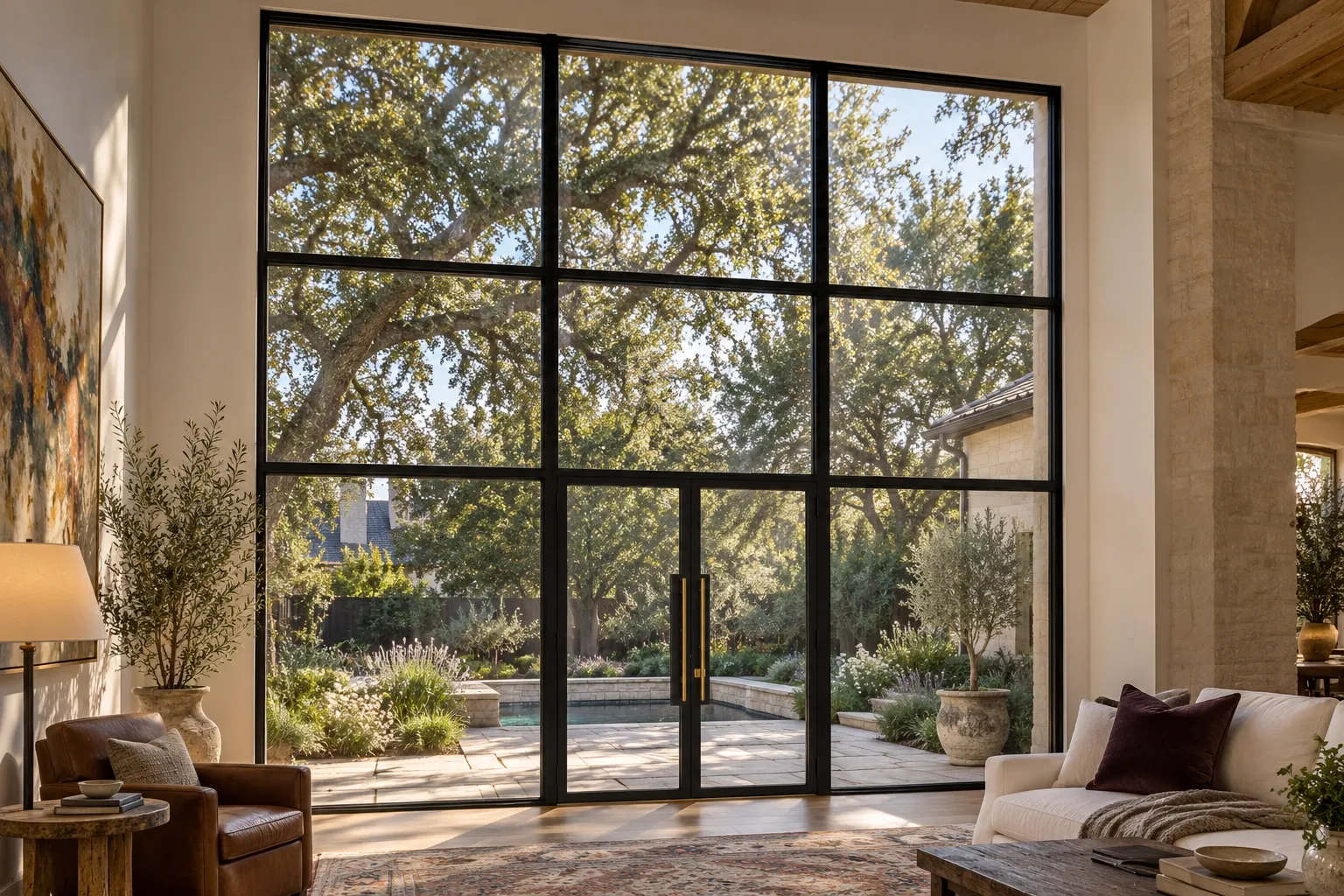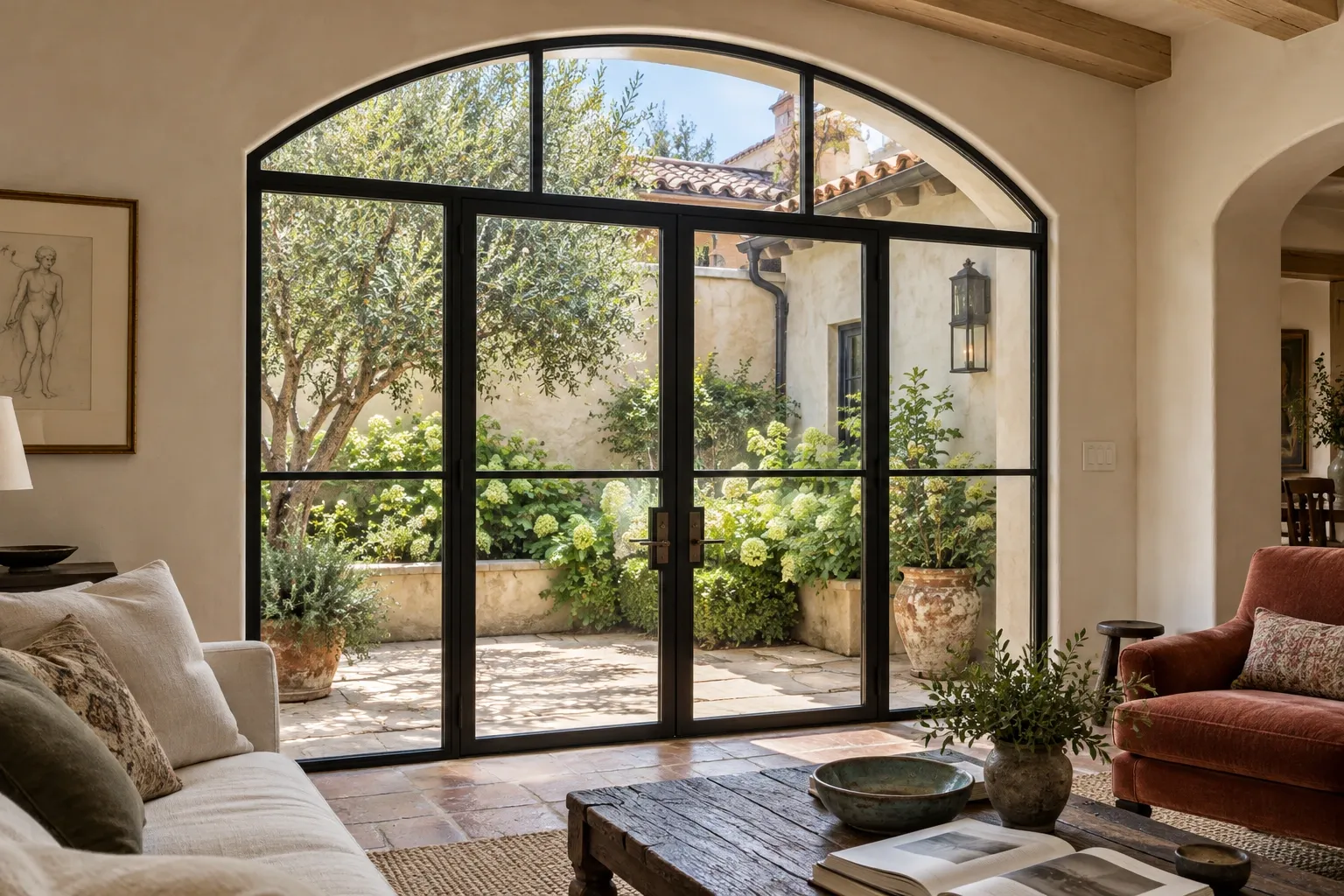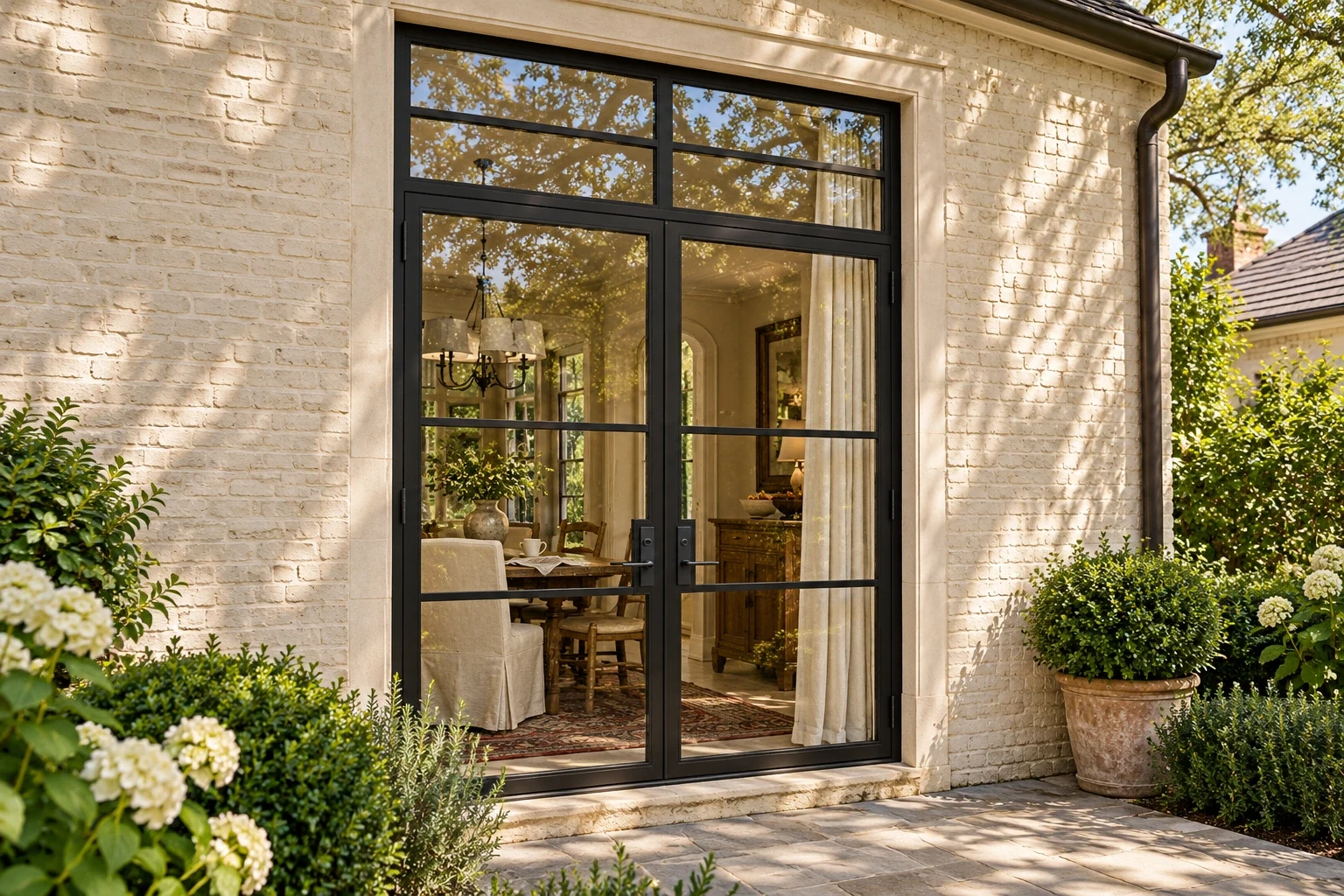
Start with the same opening on paper.
Two black steel doors can look similar in a photograph and be very different purchases. One quote may include a complete installed entrance; another may price the product before hardware, delivery and site work. A lower number becomes useful when you know what it buys.
Give each company the same brief: overall dimensions, single or double door, hinge or pivot, sidelights, transom, glass pattern and finish. Ask whether the stated dimensions describe the frame, the moving door or the clear passage. A large-looking leaf does not tell you how much room you have to walk through.
Compare the elevation drawings beside each other. That is where differences in proportion and visible steel become obvious. Use three labels on your comparison: included, separately priced, or still unspecified.
Check an item when the proposal answers it clearly.
A useful comparison starts with the same scope. Flag missing answers before comparing totals.
Ask who makes the frame—and where.
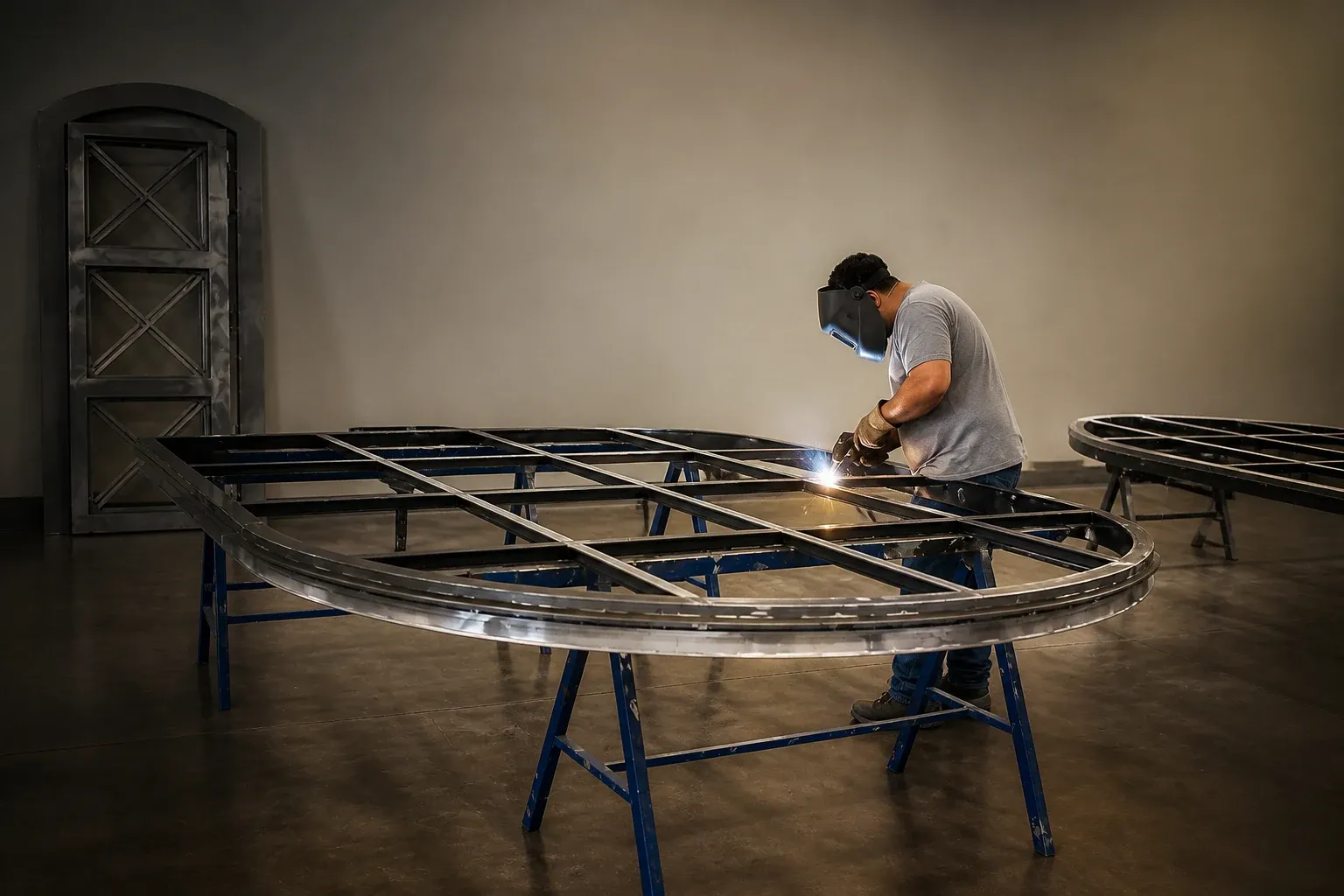
Ask where the steel is cut, fitted, welded and finished. Ask whether the local company fabricates the frame or receives a completed assembly. Then ask to see the work. A workshop visit turns a marketing claim into something you can inspect.
D’Hierro fabricates its steel doors and frames in Dallas. Our own team does the cutting, welding, grinding, priming and painting, steps from our showroom. We also install our local projects with our own crew.
That connection matters when you’re choosing a custom proportion, resolving a hardware detail or coordinating an existing opening. You’re talking to the business responsible for the steelwork.
Read the lines. Read the glass.
Ask for the visible frame and divider widths. A thin-looking line in a lifestyle image should become a specific sightline in the drawing. Confirm whether the grid is simulated divided lite or true divided lite; they have different construction, appearance and fabrication costs.
Get the glass specification in writing: insulated or single glass, the low-E coating where applicable, tempering or lamination, privacy treatment and any project-specific requirements. The phrase insulated glass alone tells you little about daylight, solar heat or the view through it.
When comparing performance figures, match glass-only values with glass-only values and whole-product ratings with whole-product ratings. The frame and glazing together determine the complete assembly. Ask for the information that applies to the configuration in your proposal.
Understand the low-E glass numbersName the parts you will touch every day.
A pull is not a lock. Lock preparation is not a supplied lockset. Ask the proposal to identify the handle or pull, locking system, hinges or pivot mechanism, and what is included for the inactive leaf of a pair.
For a pivot, discuss how the door closes and holds open. For a smart lock, confirm the exact model and preparation before fabrication. These choices affect the engineering, appearance and daily use of the entrance.
Treat the finish with the same attention. Compare an actual sample, the preparation and coating process, and how the finish can be maintained. Black is a color description; it is not a complete finish specification.
Compare pivot and hinged entrancesFollow the quote all the way to the opening.
Delivery and installation are separate jobs. Confirm who handles freight, unloading, moving the assembly into place, removal of the old door, anchoring, sealing and final adjustment. A heavy steel entrance deserves a clear handling and installation plan.
For a replacement, identify the surrounding construction too. D’Hierro specializes in the steelwork; drywall, trim, millwork, stucco and wall paint belong to your project’s finish trades. We coordinate the opening details with your builder or general contractor.
If the opening is changing, get structural work, engineering and permits assigned to the right party. Note who disposes of the old assembly and who protects adjacent finishes. Those responsibilities should be settled before the crew arrives.
Compare the total payable, including any separately listed delivery charges or applicable tax. Put exclusions beside that total. A clear scope lets you budget for the finished entrance, not discover the remaining work after ordering.
See our replacement and finish-work scopeMake the timing and coverage specific.
Read a warranty by what it covers: frame, glass seals, finish, hardware and repair labor. Ask who responds and who carries out the work. A long headline warranty can apply to a different component than the one you’re concerned about.
Ask what starts the lead-time clock and whether the estimate ends at fabrication, delivery or installation. At D’Hierro, fabrication is typically 8–12 weeks after drawing approval. Field measurement follows the deposit, and fabrication begins after the deposit and final drawing approval.
Your written terms should also explain payment stages, when the balance is due, and how design changes affect price and timing. Resolve those decisions while the project is still on paper.
- 01
Agree on scope & deposit
Make the product, responsibilities and payment terms clear.
- 02
Field measurements & drawings
Turn the agreed design into a dimensioned opening.
- 03
Approve for fabrication
Deposit and final drawing approval release the work. Document subsequent changes.
- 04
Finish, balance & installation
Coordinate site readiness, the balance due and the installation or pickup.
Come compare the work in person.
Bring your photographs, dimensions and the specifications you’re considering. We can discuss a comparable D’Hierro design and show where a different configuration could give you more glass, finer lines or a better use of the budget.
Then put your hand on the work. Operate a door, inspect the finish and walk over to our Dallas workshop. A custom entrance is something you will see and use every day. You deserve to choose it with a clear picture of the product, the people and the complete project.
Common questions.
Why do two steel doors of the same size have different prices?
Size is only the starting point. Frame profiles, glass, grid construction, hardware, finish, fabrication and installation can all differ. Compare the drawing and complete scope before judging the totals.
Does a steel-door quote include locks and handles?
Ask for them to be named in the proposal. A prepared opening for a lock does not mean the lock itself is included. Confirm the pull or lever, locking system and inactive-leaf hardware where applicable.
Is a glass U-factor the same as the rating for the whole door?
No. Glass-only performance describes the glazing. A whole-product rating includes the frame and other parts of the assembly. Match the type of rating and the proposed configuration when comparing performance.
Should I compare a delivered price with an installed price?
Add the remaining scope before comparing them. Unloading, removal, installation, site access and surrounding finish work may sit outside a product or delivery price. Compare the complete project you need.
When does D’Hierro’s fabrication lead time begin?
Fabrication is typically 8–12 weeks after drawing approval. The deposit and final drawing approval are required before fabrication begins. Installation timing is coordinated with the project and site readiness.
Can I visit the workshop before deciding?
Yes. Book a showroom and workshop visit. Bring your plans or photographs and the specifications you want to compare. You can inspect the finished work and see where our team cuts, welds and finishes the steel.