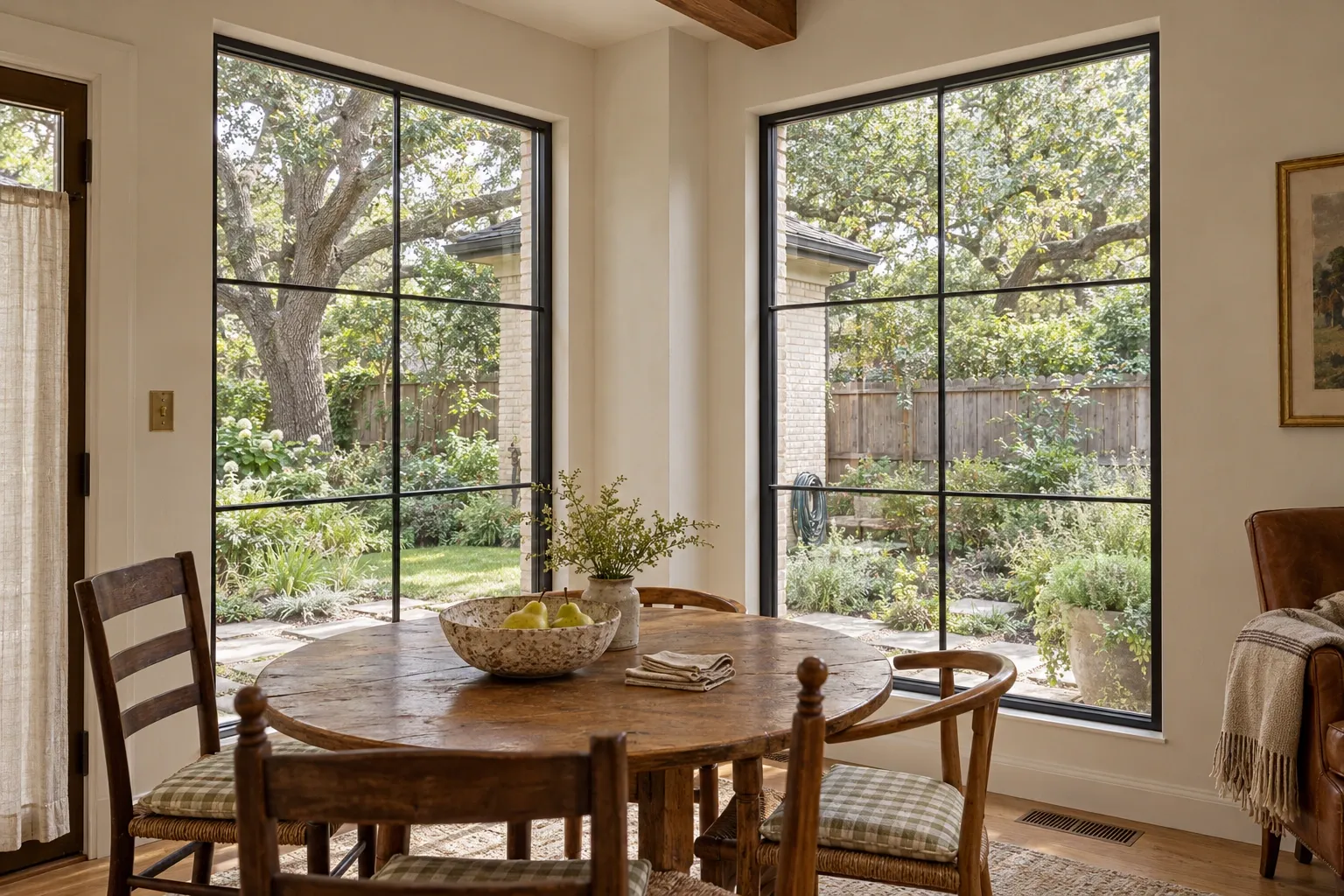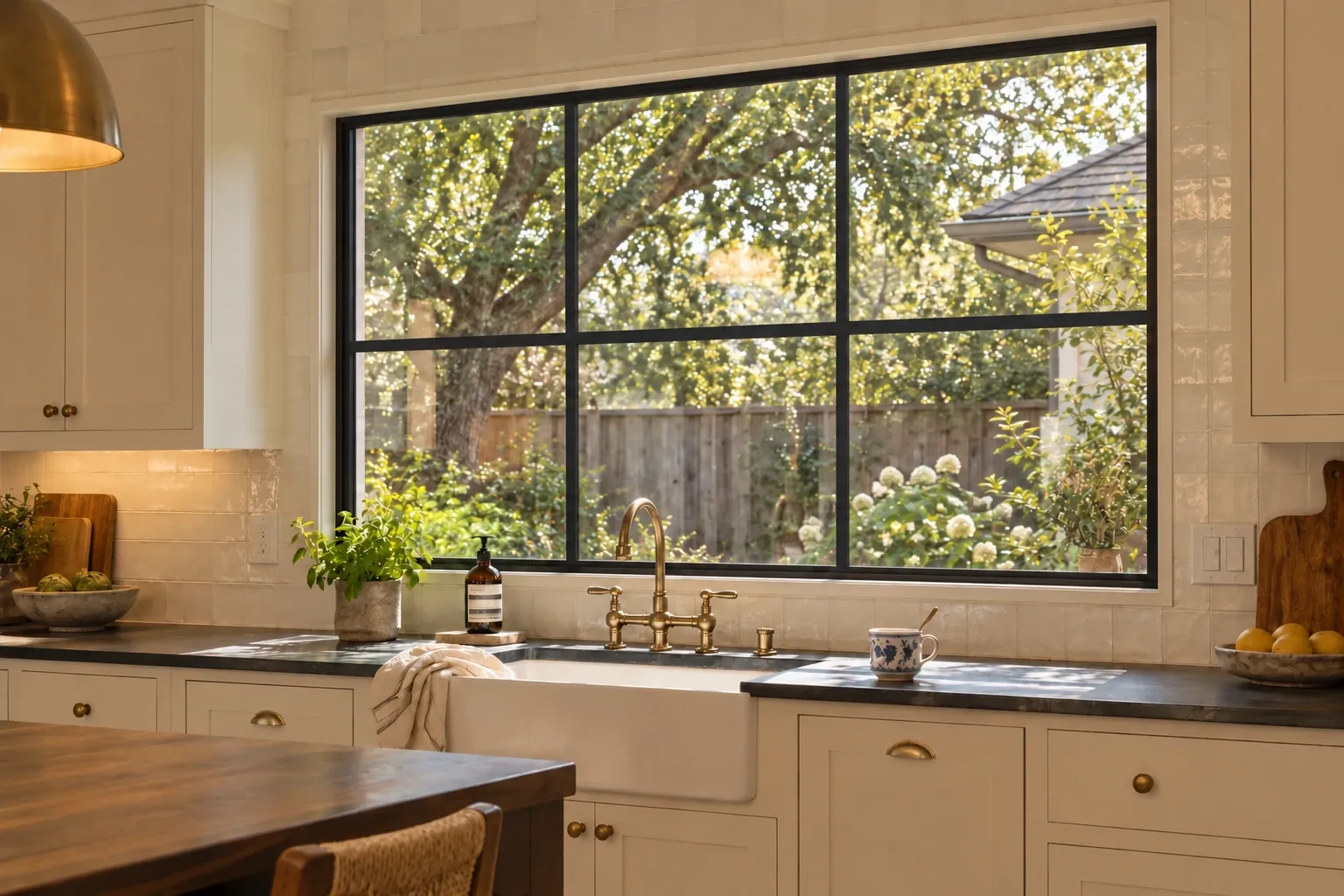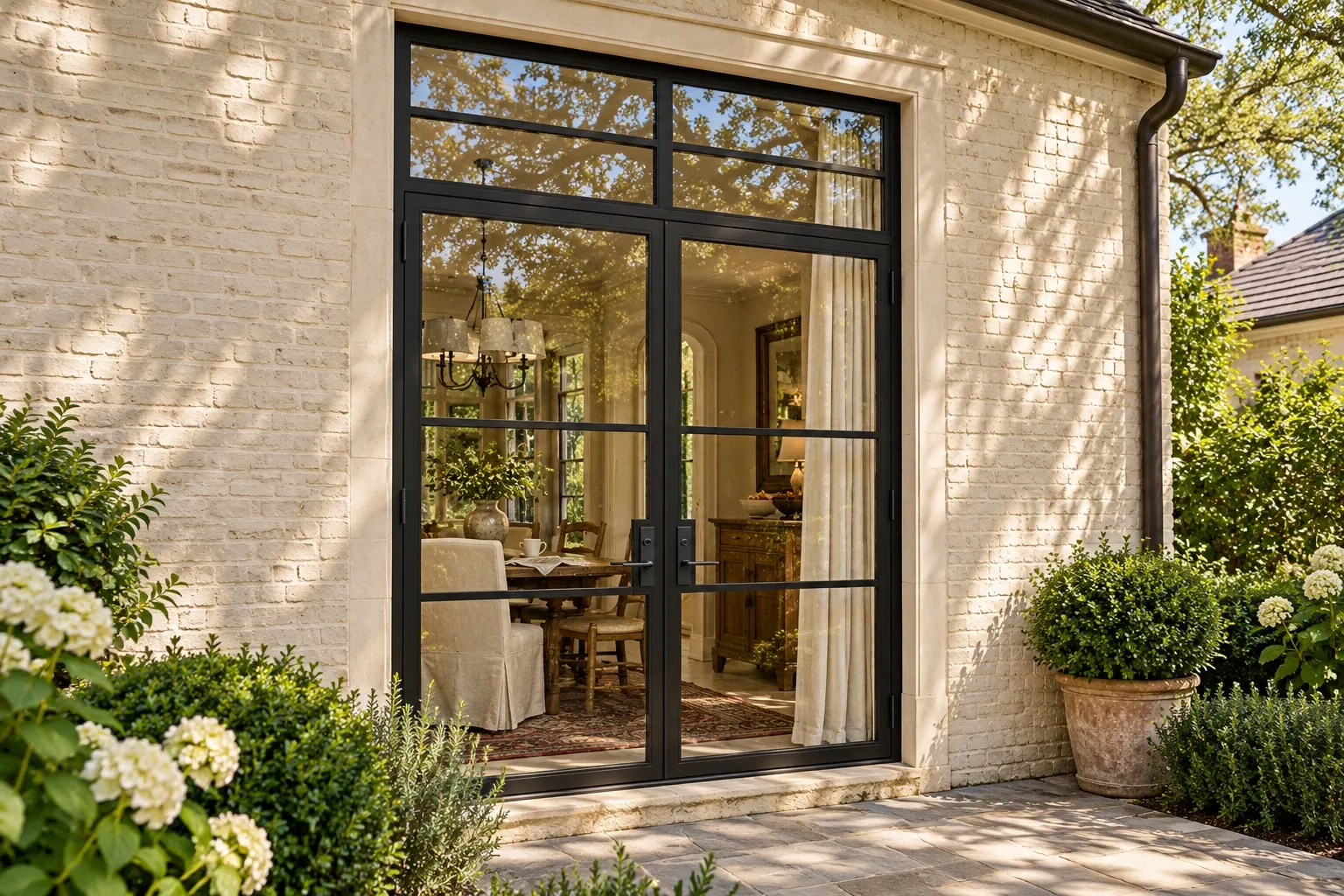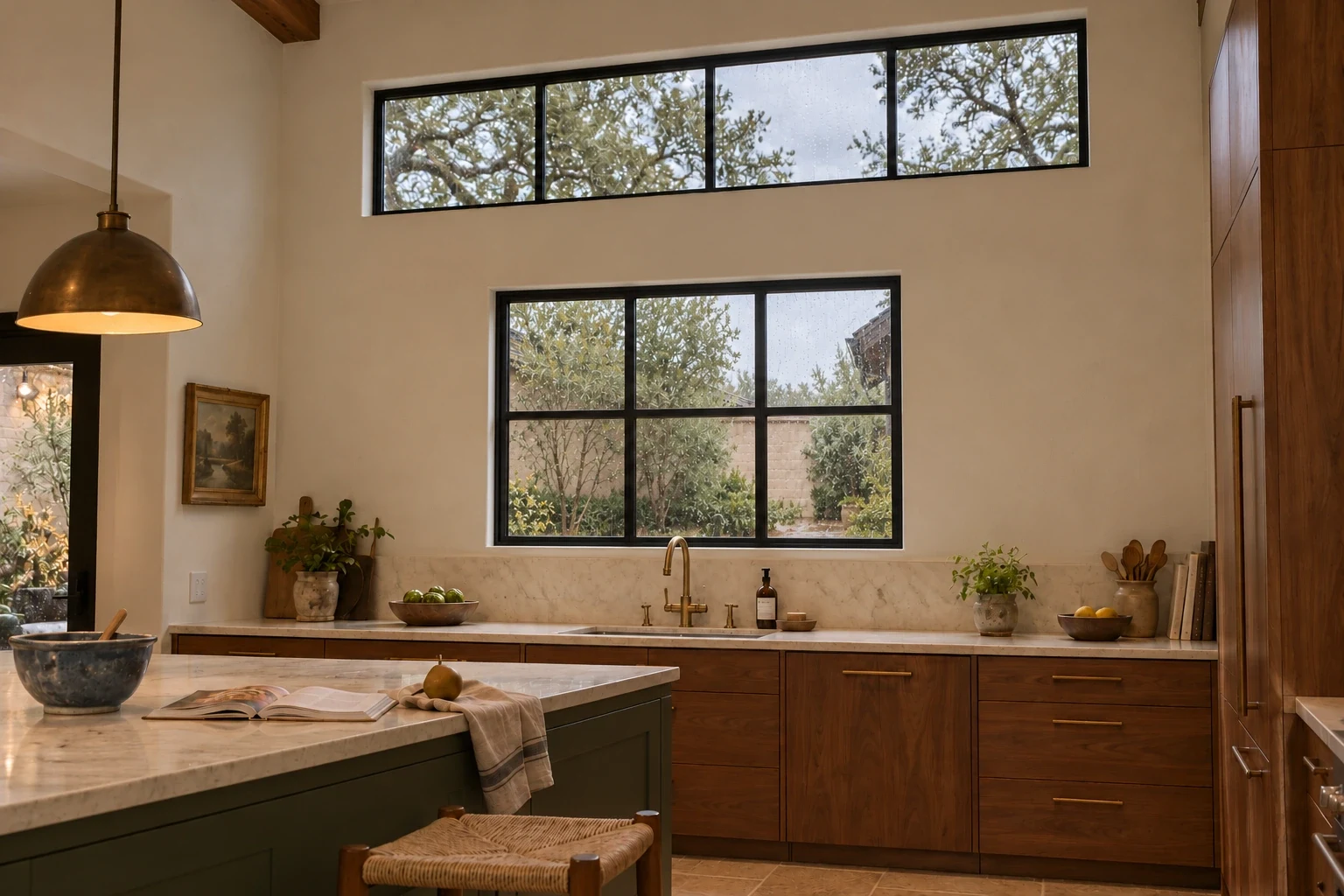
A great view deserves serious glass.
When you choose slim steel windows, the glass becomes the largest part of the opening. It decides how the garden looks from the kitchen, how the afternoon light reaches the table, and how comfortable you feel sitting beside that view.
That is why high-performance glazing is central to our exterior doors and windows. We use triple-silver low-E insulated glass as our standard approach: a combination selected to preserve generous daylight while controlling unwanted solar heat. The glass should work as hard as the steel around it.
You do not need to become a glass specialist to choose well. A few clear distinctions will tell you far more than a list of impressive-sounding product names.
Control heat without closing off the light.
Low-E means low emissivity. A microscopically thin coating on the glass reduces radiant heat transfer. Solar-control coatings also manage the sun’s energy, helping limit heat gain while admitting visible light.
That distinction matters in a Dallas home. Daylight and solar heat are related, but they are not the same thing. A carefully selected coating lets us pursue a bright interior and strong solar control together. You can keep the open feeling that made you want a glass door or a larger window.
During winter, the low-E coating also reduces radiant heat escaping from the warmer interior. The benefit works through the seasons, even though the room may feel the greatest need for solar control on a hot afternoon.
Solar-control low-E coatings limit heat from the sun while admitting visible light. The room stays bright without taking in all the solar heat of ordinary clear glass.
Low-E coatings reduce radiant exchange between the panes. Less heat is lost toward the outdoors, helping you hold onto indoor warmth in winter.
Gold line: low-E coating on the cavity-facing glass surface.
Simplified energy paths, not a performance simulation. Coating and pane thicknesses are enlarged for clarity.
Triple-silver describes the coating.
Triple-silver glass uses three silver layers within the coating system. Those layers help separate the light you want from more of the solar energy you want to control. The term describes the coating technology; it does not mean three sheets of glass.
An insulated glass unit has panes separated by a sealed cavity. The coating, pane thicknesses, cavity, gas fill and spacer form its specification. Double-pane and triple-pane describe that physical construction. Triple-silver describes a different part of the same package.
When comparing proposals, ask for the complete glass make-up. You should be able to see what is being supplied and how it fits the frame, rather than relying on the words low-E alone.
Read the light and heat numbers together.
Our standard exterior glass specification is triple-silver low-E insulated glass, with approximately 62% visible light transmission and a 0.24–0.27 solar heat gain coefficient. Those are glass figures; the selected make-up determines the final values.
Visible light transmission tells you how much visible light passes through the glass. SHGC tells you the fraction of incident solar energy admitted as heat. A figure of 0.27 means about 27% under the rating conditions. Read those two numbers side by side: they show how the glass balances the daylight you welcome with the solar heat you want to control.
Together, the figures describe a useful balance: plenty of daylight with controlled solar gain. For a whole-window or whole-door performance requirement, the frame and glass assembly needs its own rating. Keep that distinction clear when comparing specifications.
Triple-silver low-E insulated glass.
Visible light
Approximately 62% visible transmittance.
Solar heat gain
A solar heat gain coefficient of 0.24–0.27.
These describe the glass specification. Whole-door and whole-window ratings also include the frame and assembly. Confirm the glass package for your opening.
Look through the glass before you choose it.
A number cannot show you the whole appearance. Glass has a color, a level of reflection and a relationship with the light around it. Look at a sample against the stone, paint and landscape colors that matter to your project. View it from inside and outside.
We want the glass to complement the house, especially when several doors and windows sit on the same elevation. Choosing a coherent glass package helps those openings read together. Put the options beside each other early, while the design is still easy to refine.
Privacy is its own decision. Clear low-E glass remains clear glass; a reflective appearance in daylight does not provide reliable privacy when the interior is lit at night. Plan texture, obscuring glass or window treatments around the privacy you actually need.
Explore glass, finish and material optionsChoose for the room, then resolve the frame.
A shaded kitchen window and an exposed west-facing glass wall ask different things of the design. Tell us when you use the room, where the sun reaches it, and which views matter most. Show the porch, trees and neighboring walls in your photographs. They are part of the story.
Glass selection works alongside frame construction. Our exterior steel profiles are internally insulated; a true thermal break addresses heat traveling through the metal itself. The glass coating and the frame insulation have separate jobs, and both belong in a well-designed opening.
Bring those decisions together before the drawings are final. You will get a clearer specification, a more useful quote and glass chosen for the room you want to live in.
Compare thermal breaks and internally insulated steelMake the glass part of the design.
A picture window makes the view the center of attention. A fine SDL grid adds rhythm across it. An arch changes how the light and the frame meet at the top of the opening. The glazing choice belongs in that conversation from the start.
Visit our Dallas showroom with your photographs or drawings. We can discuss the glass beside the profiles, finishes and hardware you are considering. You will leave with a better picture of the complete opening—and a clear direction for what we build.
Choose picture glass, SDL or true divided litesCommon questions.
Will low-E glass make my room dark?
It does not have to. Solar-control low-E coatings are designed to balance daylight with reduced heat gain. Our standard glass specification targets approximately 62% visible light transmission. Compare the glass appearance alongside its performance figures.
Does low-E glass help in winter?
Yes. Low-E coatings reduce radiant heat transfer, helping retain warmth indoors during colder weather. Solar-control versions also limit unwanted heat from the sun, making the specification useful through both Dallas summers and winter cold spells.
Does triple-silver mean triple-pane?
No. Triple-silver refers to three silver layers within the coating. Triple-pane refers to three panes of glass in the insulated unit. They describe different features, so ask for both the coating and the glass make-up when comparing proposals.
What is the difference between SHGC and U-factor?
SHGC measures solar heat admitted through the rated glass or product. U-factor measures heat flow associated with the temperature difference between inside and outside. Lower values mean less transfer in each case. Visible light transmission tells you something else: how much daylight passes through.
Does low-E glass give me privacy at night?
Clear low-E glass does not provide reliable nighttime privacy. If privacy matters, plan an obscuring or textured glass option, or suitable window treatments. We can discuss privacy and performance together as part of the glass selection.
Can I use low-E glass with SDL or true divided lites?
Yes. With SDL, the bars cross a continuous glass unit. With true divided lites, each glazed section has its own unit. We select the glass and the grid together so the appearance and specification work across the opening.